How the work gets done
Four steps, one of which is yours. The rest is programming, coaching and keeping a record honest enough to argue with.
Consult, assess, programme, progress
In that order, and the order is the point. Most programmes fail at step two, because nobody wrote down where they started from and so nobody can tell whether anything worked.
- 01
Consult
A conversation first: what you want, what you have already tried, what your week honestly looks like, and anything that currently hurts. It is also where you find out whether this is the right answer for you, which is a better thing to learn now than three months in.
- 02
Assess
Movement, current strength, and the numbers you are starting from. It is not a test to pass. It is the baseline everything after it gets measured against, and it is the reason progress can be shown to you rather than described.
- 03
Programme
The plan, written down: the lifts, the sets and reps, the weight to start at, and the rule for adding to it. You know what you are doing on a given day before you walk in, which is most of the difference between training and going to the gym.
- 04
Progress
Sessions coached, numbers logged, and the programme rewritten when the numbers say it should be. Blocks end, get reviewed and get replaced. A plan that never changes is a plan that stopped working a while ago.
Four rules the coaching will not break
None of them is exotic. All of them are the things quietly dropped when somebody wants a result faster than the body is willing to give one.
The load moves
Progressive overload is not a slogan, it is the only mechanism there is. If nothing about the work got harder this month, nothing about you is going to be different next month.
Technique first, then weight
A lift is only worth loading once it looks the same on the last rep as it did on the first. Fixing it early is cheap; fixing it after three years of practice is not.
Recovery is part of the plan
Sleep, food and the days you do not train are what turns the sessions into an adaptation. Training harder while recovering worse is the most common way to stand still.
The plan fits your week
A programme you cannot follow is worth less than an ordinary one you can. Three honest sessions beat five planned ones, and the plan is built around the week you actually have.
What gets written down
These five, every block. Not because a spreadsheet is motivating, but because a programme can only be rewritten from evidence, and memory is not evidence.
- Load
- Weight on the bar
- Volume
- Hard sets per week
- Repetitions
- Reps at a given weight
- Body
- Weight, waist, photographs
- Reviewed
- Every block
Photographs and measurements are optional and yours. Nothing is published, shared or put on a website, including this one.
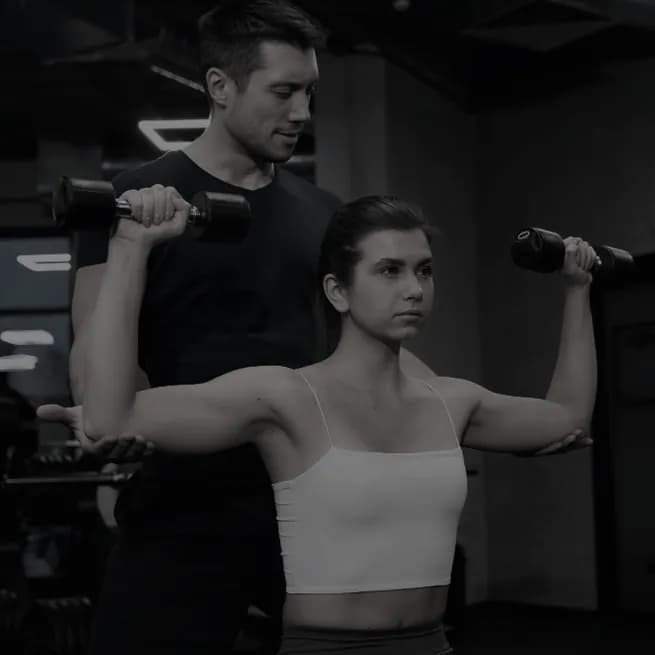
The parts the programmes are built from
Every programme is some arrangement of these. The arrangement is what you are paying for. The parts are the same ones everybody has, and anyone telling you otherwise is selling a secret that does not exist.
- Shoulders
- Arms
- Back
- Chest
- Legs
- Squat
- Deadlift
- Bench press
- Intervals
- Cardio
- Nutrition
Food sits alongside the lifting rather than under it. Enough protein to keep what you build, enough total food to train hard on, and a set of habits that survive a week where nothing goes to plan.

The method starts with a conversation
Tell us what you want, what you have already tried and what your week allows. The rest of this page is what happens after that.